Meet Sherrain
The voice behind the whisper
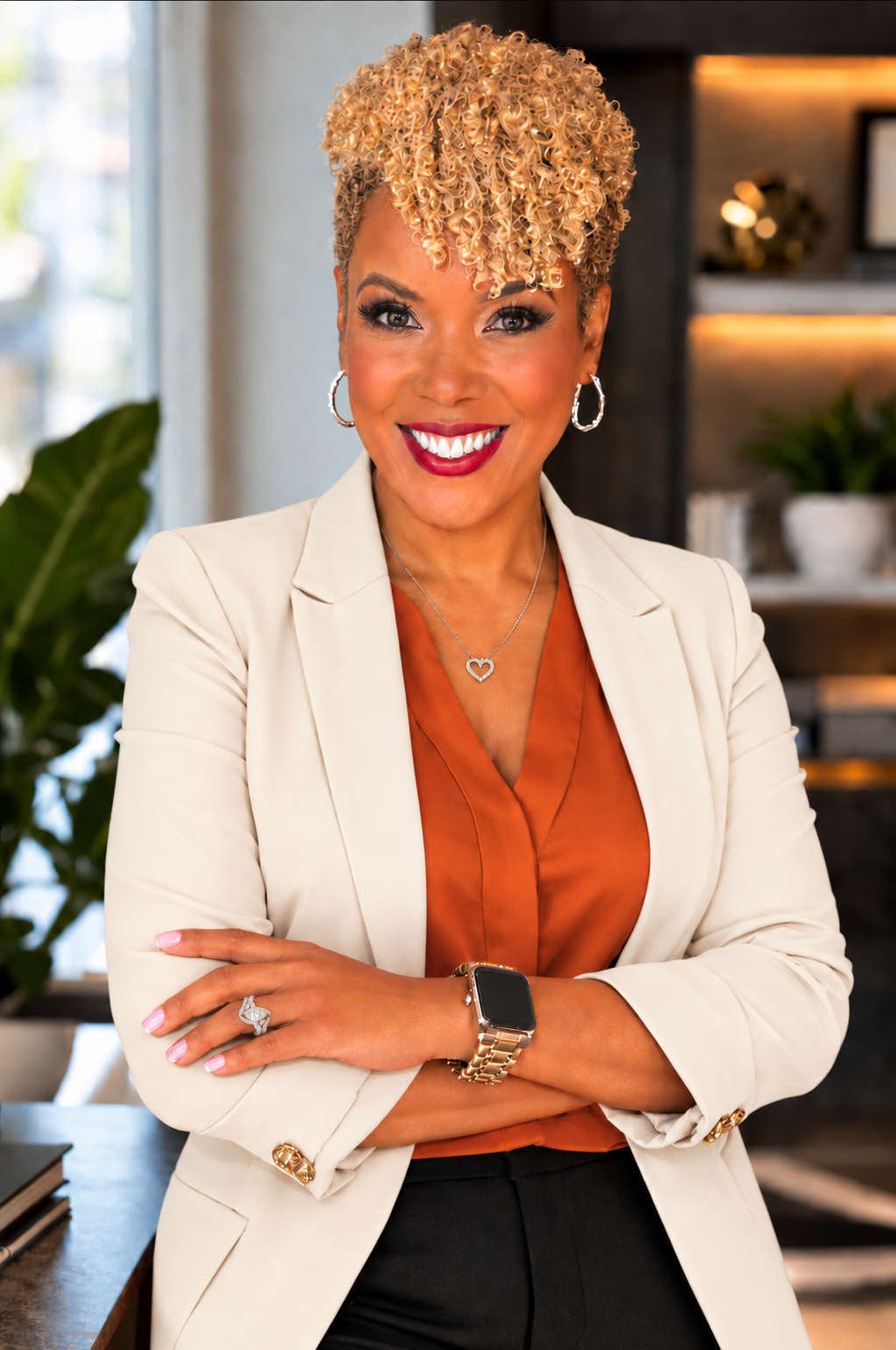
I'm Sherrain Myles, and I want to tell you the truth about how this started.
I did not build The Shift Whisperer after I came through something. I built it inside the coming through. In the middle of the quiet house and the phone calls about my parents and the grief I hadn't finished and the body that had started doing things nobody warned me about.
I kept looking for the room — the one where women were saying the real thing out loud. Not the polished version. Not the caption version. The version you only say at eleven at night to one friend you trust.
I couldn't find that room. So I built it.
What I know about the in-between
I know that a shift rarely announces itself. There's no ceremony for the last time you pack a lunch, or the morning you realize you've become the parent to your parent, or the day you understand the body you had is not coming back.
I know how lonely it gets when everyone thinks you're fine because you're functioning.
I know the guilt of grieving something you also chose. You can want your child to leave and miss her so much you cry in the car. Both are true. Both are allowed.
And I know — this is the part that changed everything for me — that the loneliness breaks the moment another woman says me too. Not advice. Not a plan. Just another woman, in her own version of it, saying: I'm here, I know, keep going.
That's what this whole place is. A room full of me too.
What I'm not
I'm not your coach. I'm not your therapist. I don't have a framework that will fix your life in ninety days, and I'd be suspicious of anyone who says they do.
What I have is twenty years of listening to people in the hardest seasons of their lives, a few shifts of my own that took everything I had, and a deep belief that women were never meant to do this alone.
I held a title for a long time, and then I didn't. The work ended and I had to become someone new — which is its own shift, the one I write about as Reinvention. It's part of why this place exists.
I hold the door. You decide whether to walk through it, and how fast, and what you carry.
Nanie's granddaughter
Everything I know about holding space, I learned from my grandmother.
She was the strongest woman I have ever known, and I got to watch her be strong in the most vulnerable ways there are.
When my grandfather was diagnosed with Alzheimer's, she cared for him. When my mother was in the hospital — and she was, more than once, starting when I was three years old — she took care of both of us. She ran her own business. She supervised at a bank. She held the whole thing down in the seasons when it looked certain that everything was about to come apart. And she did it with grace. She always made it look like strength.
In the last years of her life, I had the honor of taking care of her. I learned more in that time than I have learned anywhere else. Now I lean into what she left in me. The strength I have is largely hers — her blood runs through my body, and I am grateful for it. She made it look easy so the rest of us wouldn't worry.
This is the place where we don't have to do that part.
How I found Rayne
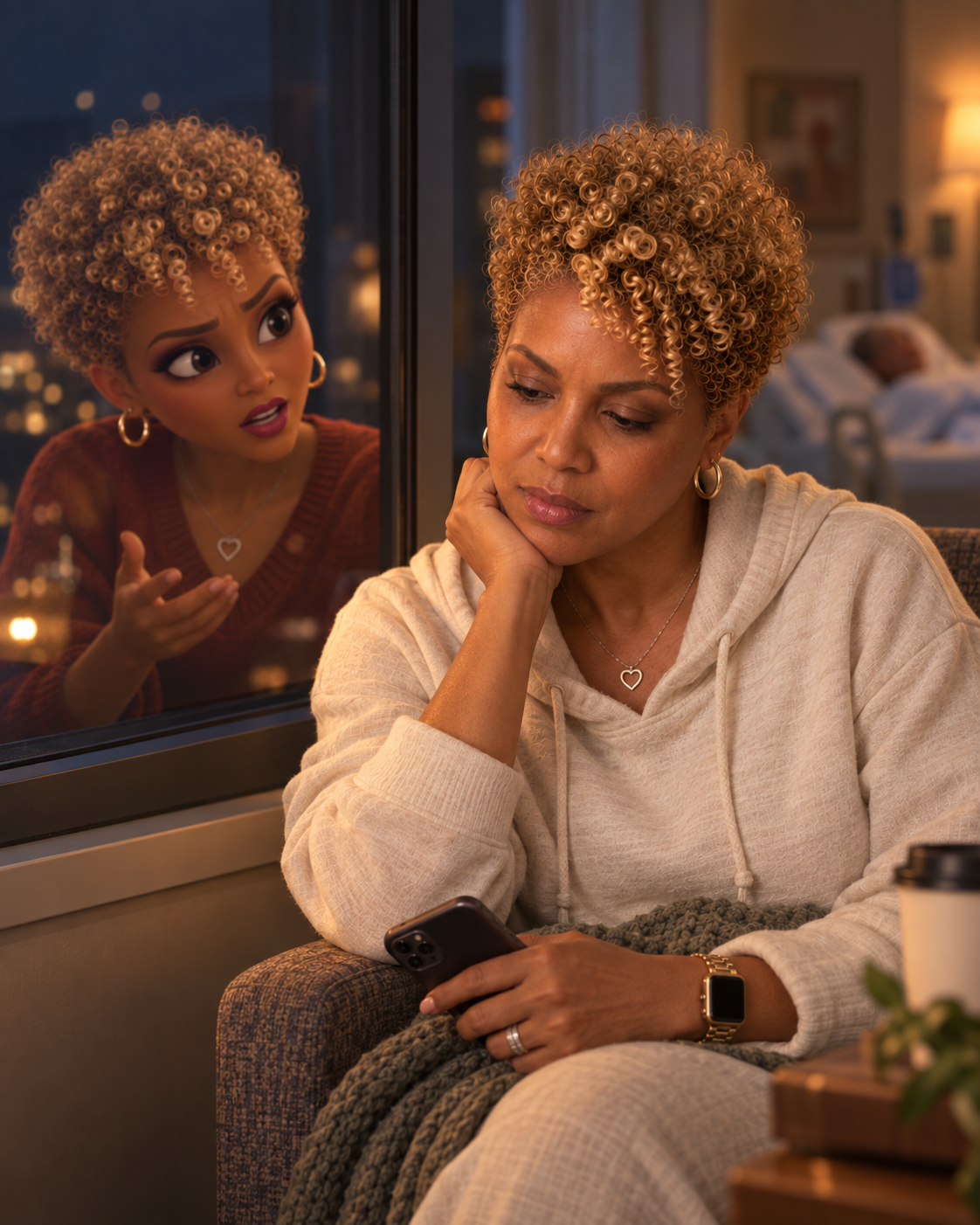
My mother was on a ventilator, and I was the one answering her phone.
I'm an only child. When she couldn't speak for herself, all of it came to me. Every call. Every question. Every person who loved her and needed to know how she was doing — and there were so many of them, because that's the kind of woman she is.
I was also the one sitting with the doctors. Listening to words I didn't know. Writing them down, looking them up in the hallway, then going back in and trying to explain them to my mother in a way she could hold on the days she was awake enough to hear me.
So I'd hang up from one call and answer the next. Polite. Gracious. Careful.
And underneath all that politeness was a sentence I never said out loud.
I cannot manage your need to know right now. I am trying to understand what is happening to my mother, so her grandchildren and I can make the right decisions for her.
I thought it every single day. I never said it once.
I'd been playing with AI, building a twin of myself, mostly for fun. And somewhere in that hospital — my mother asleep or unable to speak, nobody in the room to say any of this to — I made a cartoon version of me instead.
I called her Rayne.
My mother and my grandmother have called me Rain my whole life. It's the end of my name and it's what they saw in me. So when I needed someone to carry the part I kept swallowing, that's who showed up — spelled her own way.
She was a drawing because I didn't know yet how to make anything else. That turned out to be the right accident. A cartoon can say what a real face can't get away with.
She said the things I was thinking. All of them. I started putting her on Facebook, and then I learned how to animate her and give her my voice — and something I didn't expect happened. Women started talking back to her. She became a lot of people's best friend.
Comic relief, in a season that was not comical.
That's who she still is. Not a mascot. The part of me that stopped being polite so the rest of me could keep going.
My promise to you
No judgment. No fixing. No timeline. Just presence, honesty, and a circle of women who will not flinch when you tell them the truth — at your own pace, in your own way.